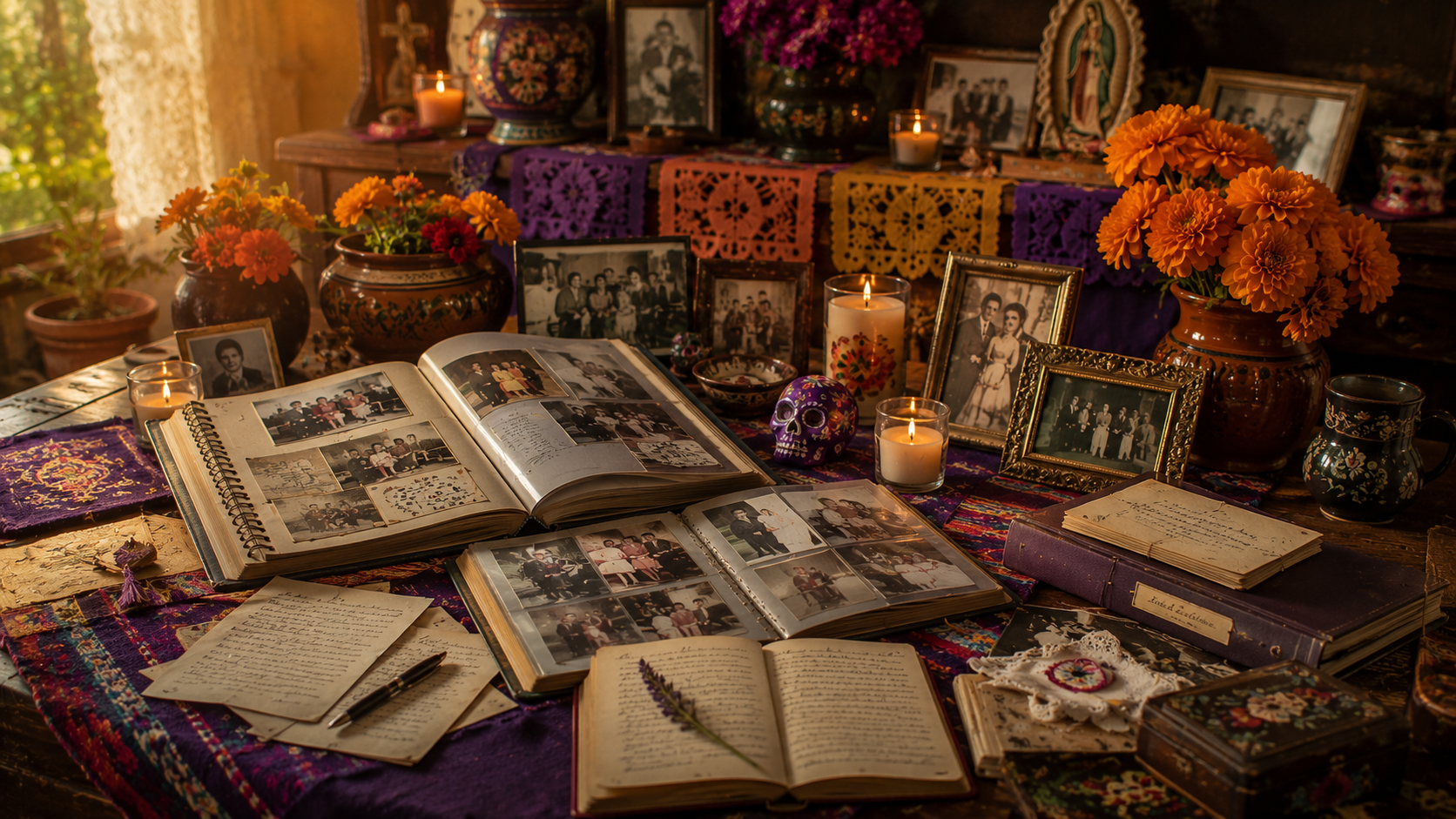
An ofrenda is a space created in remembrance of someone who has passed away.
Traditionally rooted in Día de los Muertos, an ofrenda is often built with photographs, candles, flowers, food, personal belongings, and memories connected to the person being honored.
But at its heart, an ofrenda is not about decoration.
It is about remembrance.
The meaning behind an ofrenda
The word “ofrenda” means offering.
Families create these spaces as an offering of love, memory, reflection, and connection.
An ofrenda is meant to say:
“We still remember.”
Across generations, cultures, and traditions, people have always searched for ways to keep memory alive after loss.
What is placed on an ofrenda?
Every family is different, but many ofrendas include:
- Family photographs
- Candles
- Flowers such as marigolds
- Handwritten notes
- Favorite foods
- Music
- Personal objects
- Stories and memories
The purpose is not perfection.
The purpose is presence.
Remembrance exists in every culture
While the word “ofrenda” comes from Mexican tradition, remembrance itself is universal.
Around the world, families preserve memory through:
- memorial tables
- ancestor photographs
- remembrance candles
- prayer traditions
- seasonal holidays
- family storytelling
- preserved letters and recordings
The details may change.
The desire to remember does not.
Why remembrance matters
When memories disappear, stories disappear with them.
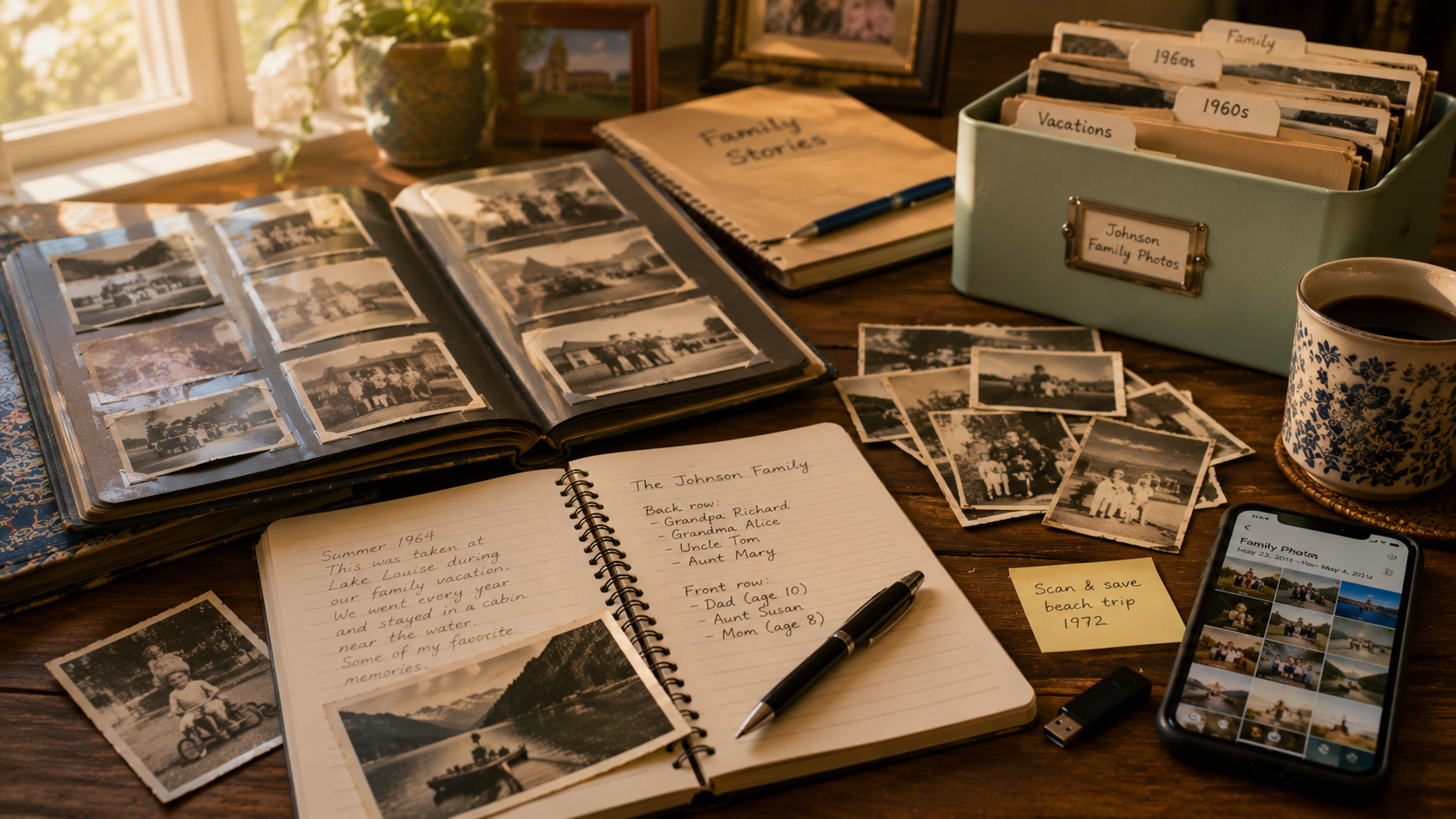
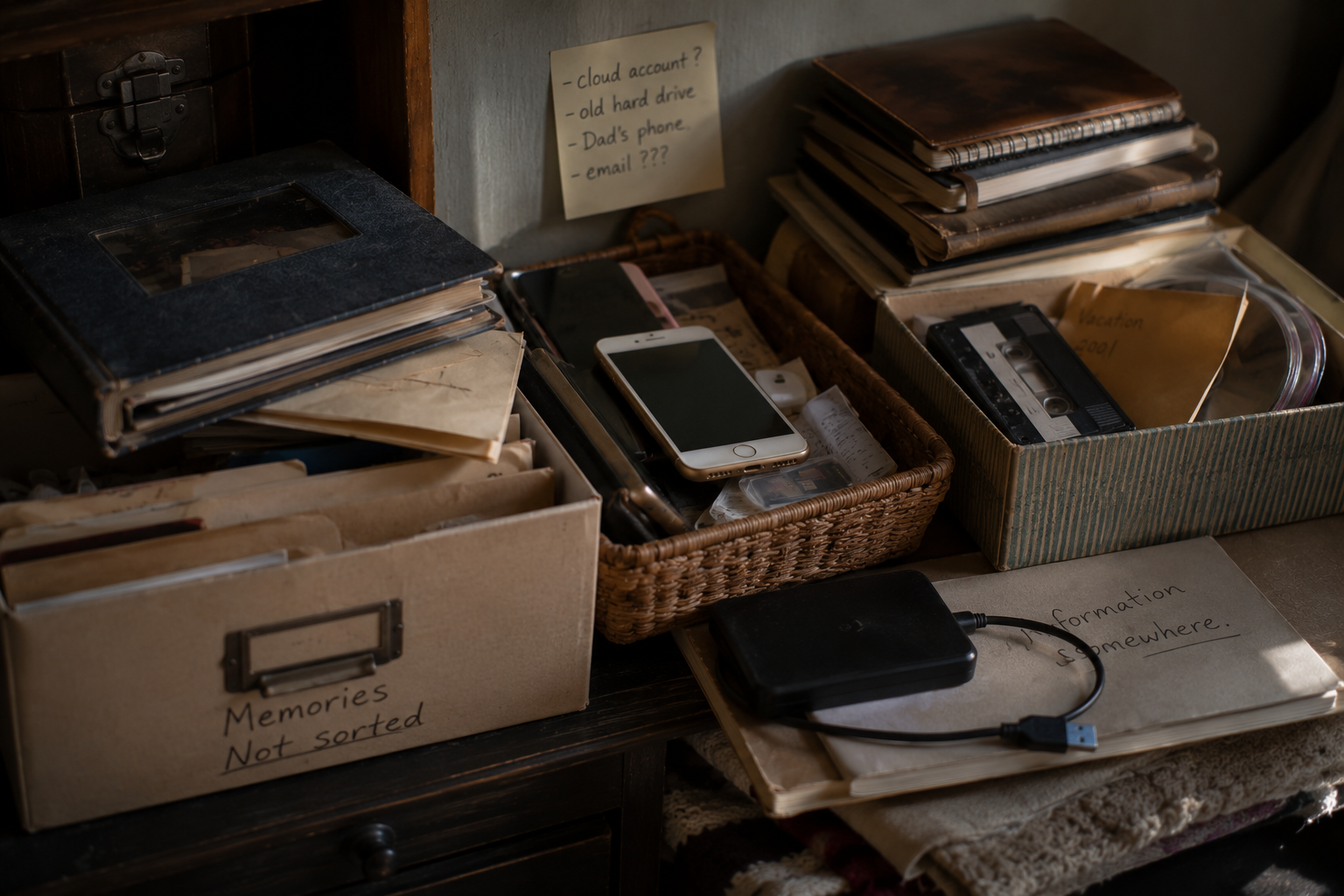
Photographs get lost. Voices fade. Phones break. Accounts are deleted.
Many families do not realize how fragile memory can become until after loss.
Preserving stories, voices, photographs, and traditions helps future generations understand where they came from and who came before them.
A modern form of remembrance
Today, remembrance can also live digitally.
Families now preserve:
- videos
- voice recordings
- photographs
- written memories
- shared family stories
What matters most is not where remembrance happens.
What matters is that it remains.
Remembering with intention
An ofrenda is ultimately an act of care.
It is a reminder that ordinary lives mattered. That family history matters. That memory deserves a place to live.
And sometimes, the quiet act of remembering is its own offering.