After someone passes away, families often find themselves surrounded by photographs.
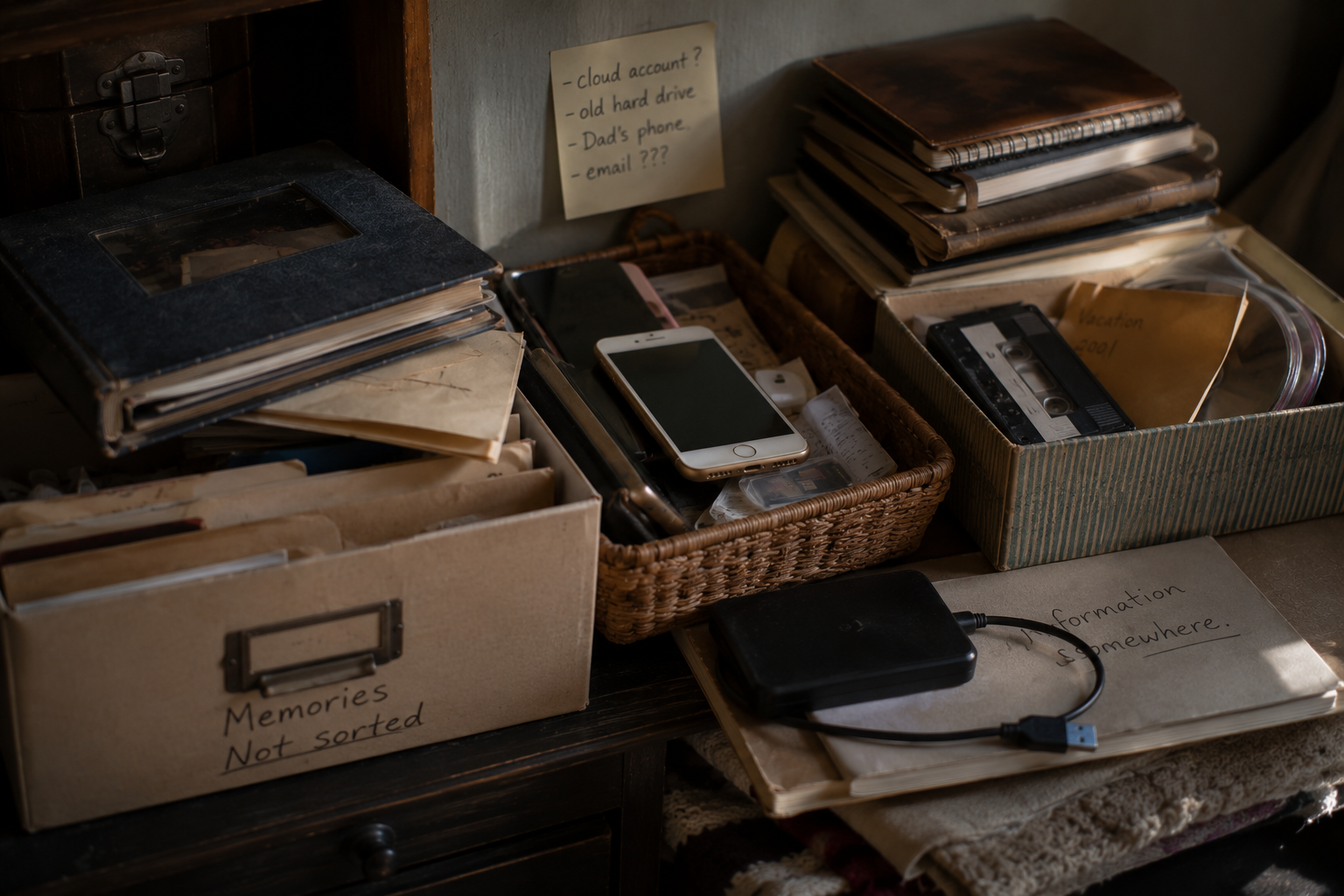
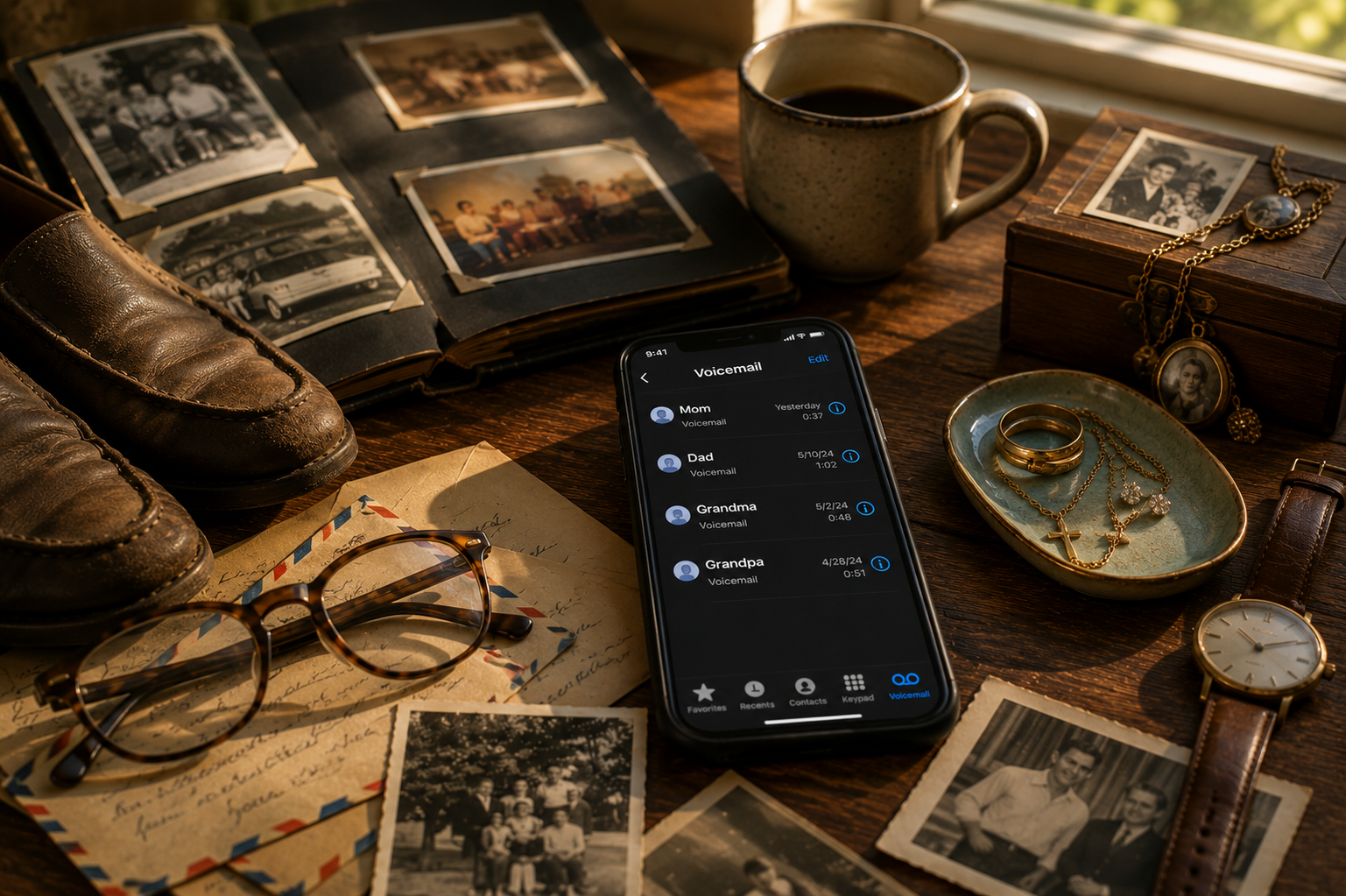
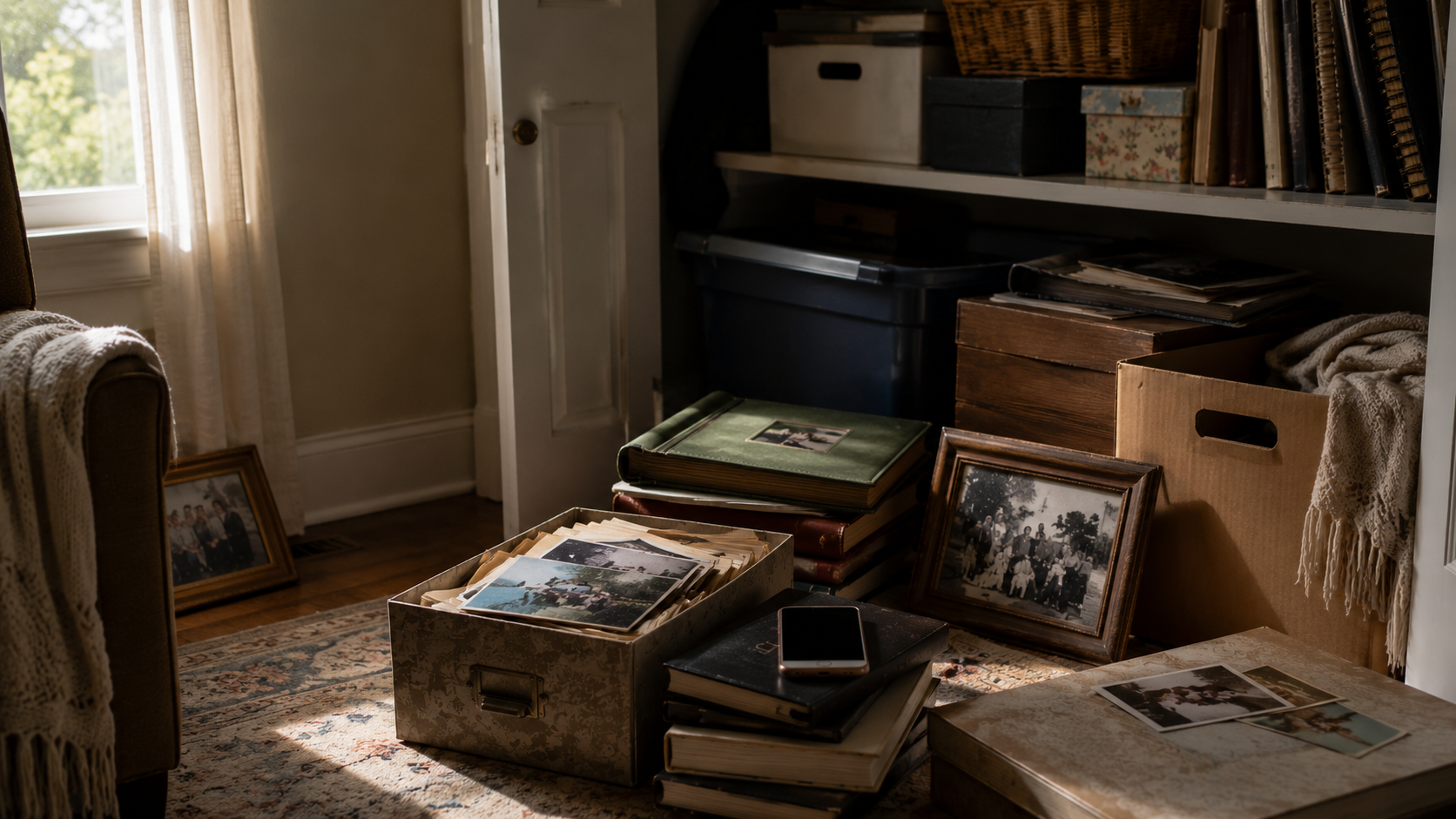
Albums in closets. Boxes in basements. Pictures stored on phones and computers. Old framed photographs tucked into drawers.
For many people, this becomes the first moment they truly realize how fragile memory can be.
Photographs often become scattered
Over time, family photographs usually spread across many places.
Some live on:
- old phones
- cloud accounts
- hard drives
- social media pages
- printed albums
- storage bins
After loss, families may not know:
- where everything is stored
- who has access
- what was backed up
- what stories belong to certain images
Important memories can quickly become disorganized.
Many photos lose context over time
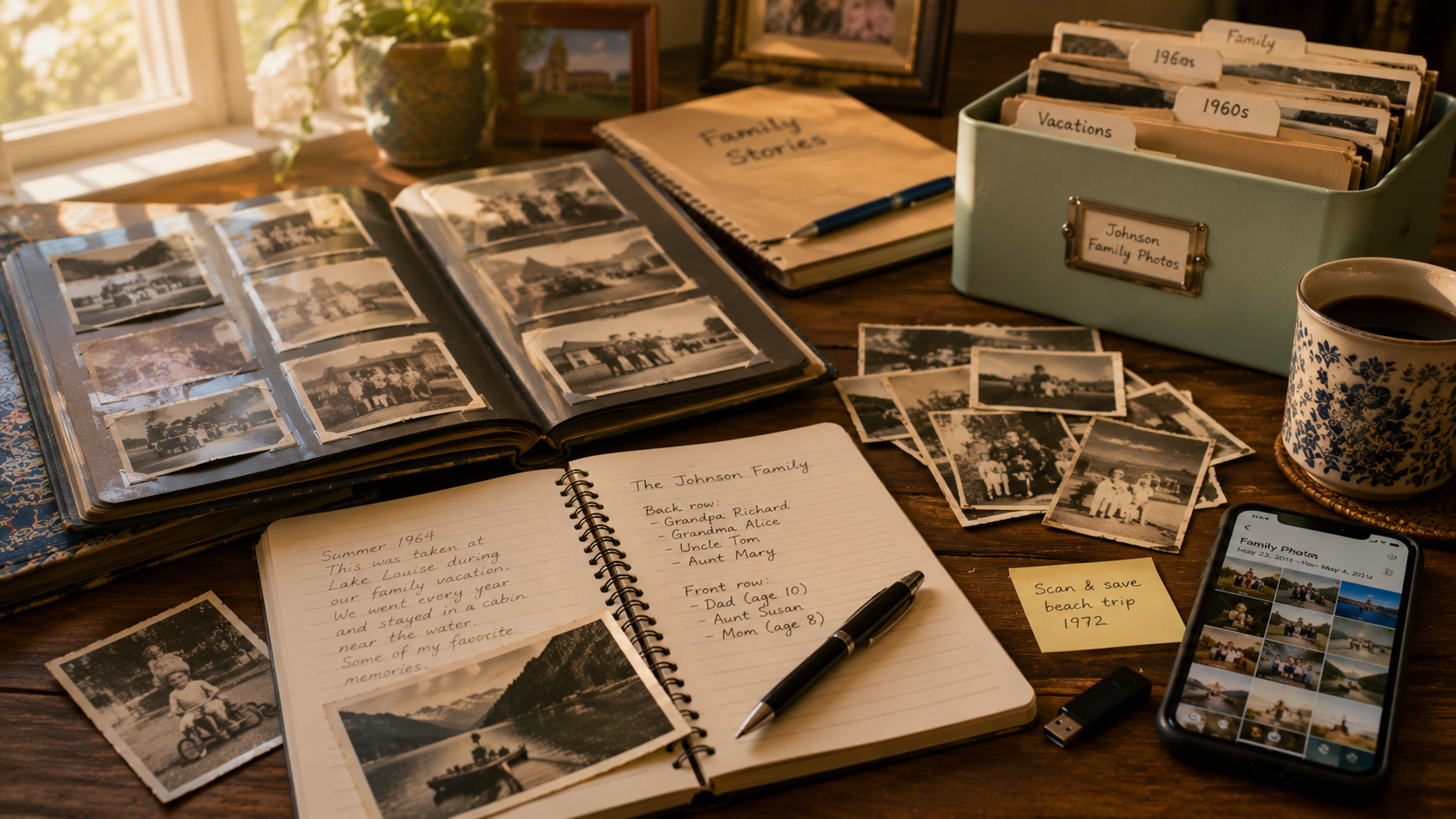
A photograph without explanation can slowly become disconnected from family history.
Future generations may not know:
- who appears in the image
- where it was taken
- what relationship existed
- why the moment mattered
When stories are not preserved alongside photographs, memory becomes incomplete.
Grief makes organization difficult
Most families are not emotionally prepared to organize memories immediately after loss.
Sorting through belongings can feel overwhelming.
Some photographs are packed away quickly. Some are accidentally lost during moves. Others remain untouched for years because the emotions feel too heavy.
This happens far more often than people realize.
Small preservation steps matter
Families do not need perfect archives to begin protecting memories.
Simple actions can help:
- scanning printed photographs
- labeling folders
- writing names and dates
- backing up images
- gathering memories into one shared space
Even small organization efforts can protect important family history.
The ordinary photographs often matter most
Over time, families often treasure:
- casual family gatherings
- imperfect snapshots
- everyday routines
- quiet moments at home
- candid photographs
These images become reminders of presence, personality, and connection.
What once felt ordinary can later feel irreplaceable.
Preserving memory is an act of care
Photographs are not only images.
They are evidence of relationships, traditions, and moments that shaped a family.
After loss, preserving photographs becomes part of preserving the story of a person’s life.
Not perfectly.
But intentionally.
Memory deserves a place to remain
Many families eventually realize they are not only trying to save files.
They are trying to protect connection.
A photograph can help future generations remember: someone existed, someone was loved, and someone mattered deeply to the people around them.